Sightseeing places,spot to visit near Fushimi Inari Taisha Shrine. - North route and South route
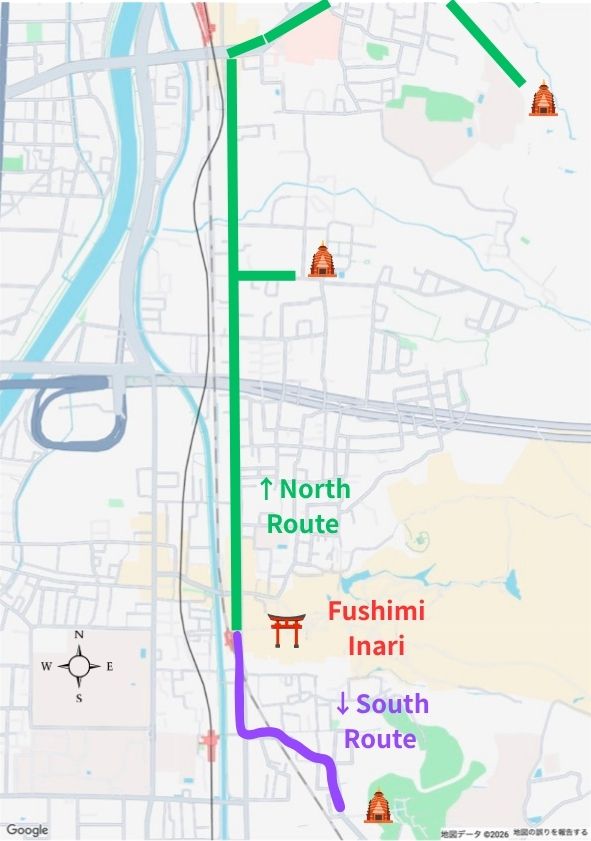
If you were to ask me, 'I just went to Fushimi Inari Taisha. I have a little time before heading to my next destination. Are there any recommended sightseeing spots nearby? Are there any other things to see?' I’d be stumped. How long does 'a little time' even mean—like a few minutes or a few hours?
I’ll suggest two routes to you: one going north from Fushimi Inari Taisha, and one going south.
If it takes you more than two hours including the round trip, the north route is recommended, and if you have less than two hours, the south route is recommended.
North Route
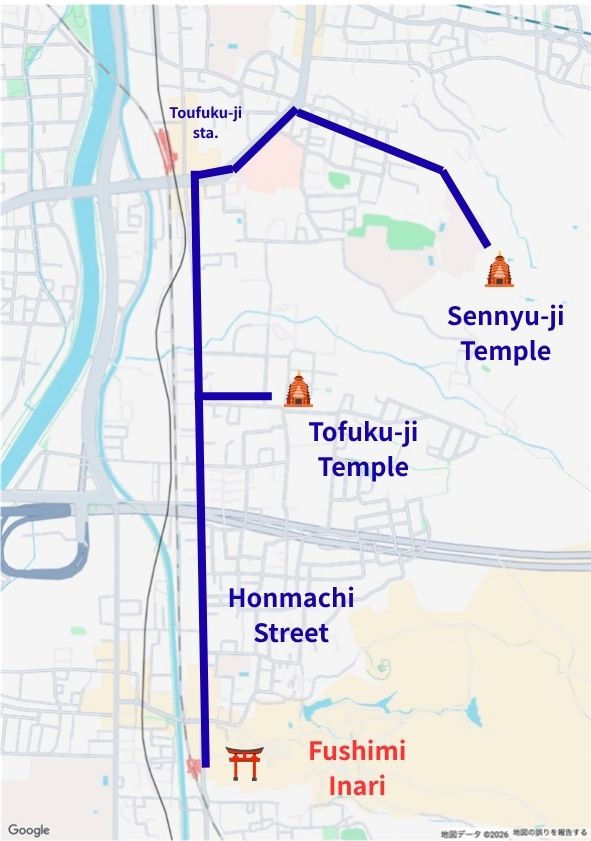
This route goes about 3 km north from Fushimi Inari Taisha. There are two large, prestigious temples: Tofukuji and Sennyuji. Both have spacious grounds with a main hall and several sub-temples. Just walking around the grounds is enough to enjoy the typical Kyoto atmosphere. If you have an extra hour or two, it's also nice to pay the admission fee and check out the Buddha statues and gardens.Both close around 4 PM. If you’re going to visit, you have to go during the day. Since Fushimi Inari Taisha can be visited in the morning or at night, you should prioritize the temple.
If you just walk around Tofukuji, it takes about 2 hours. If you visit both Tofukuji and Sennyuji, it takes around 3 hours to half a day.
Tofuku-ji Temple(東福寺)
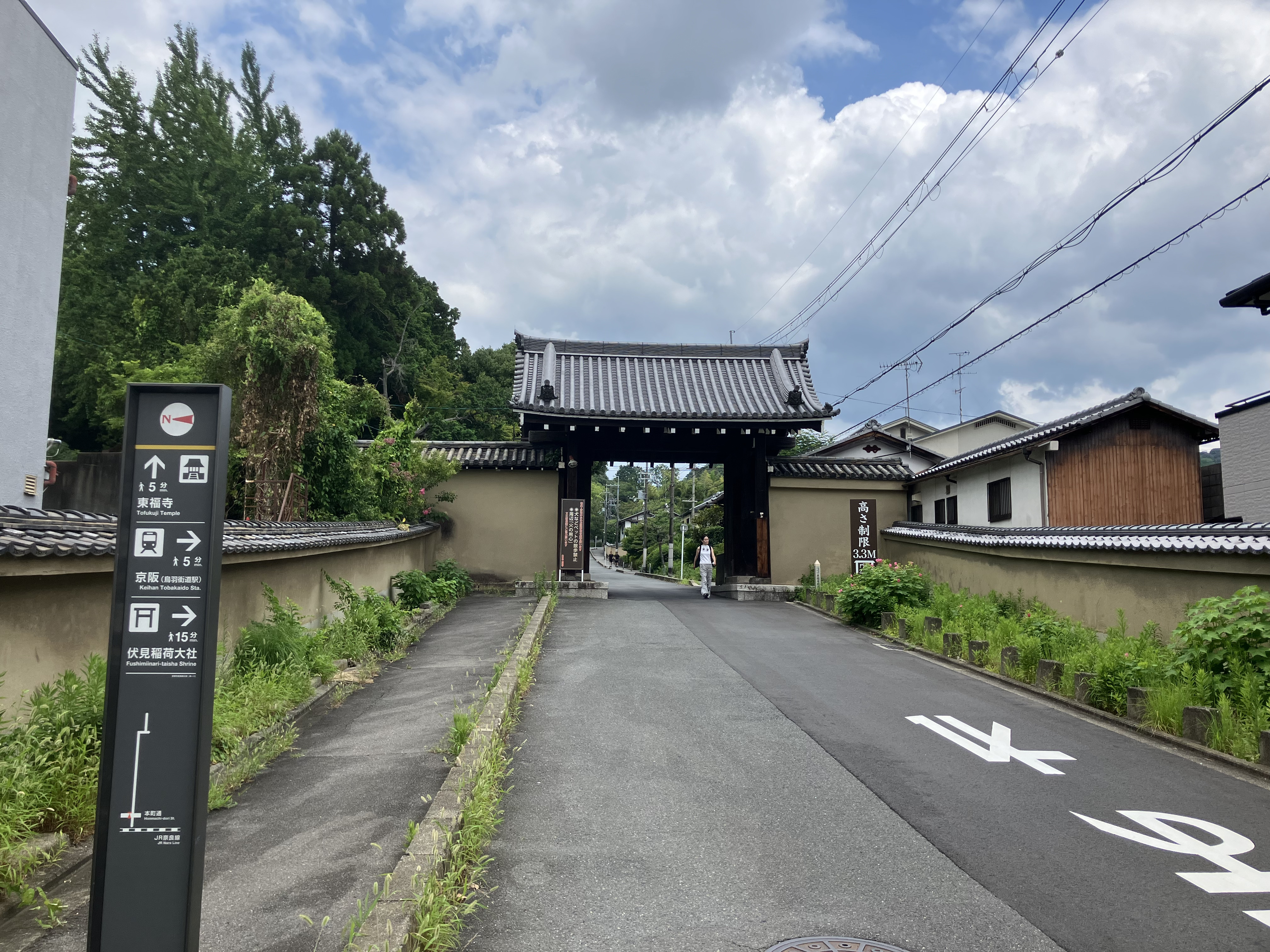
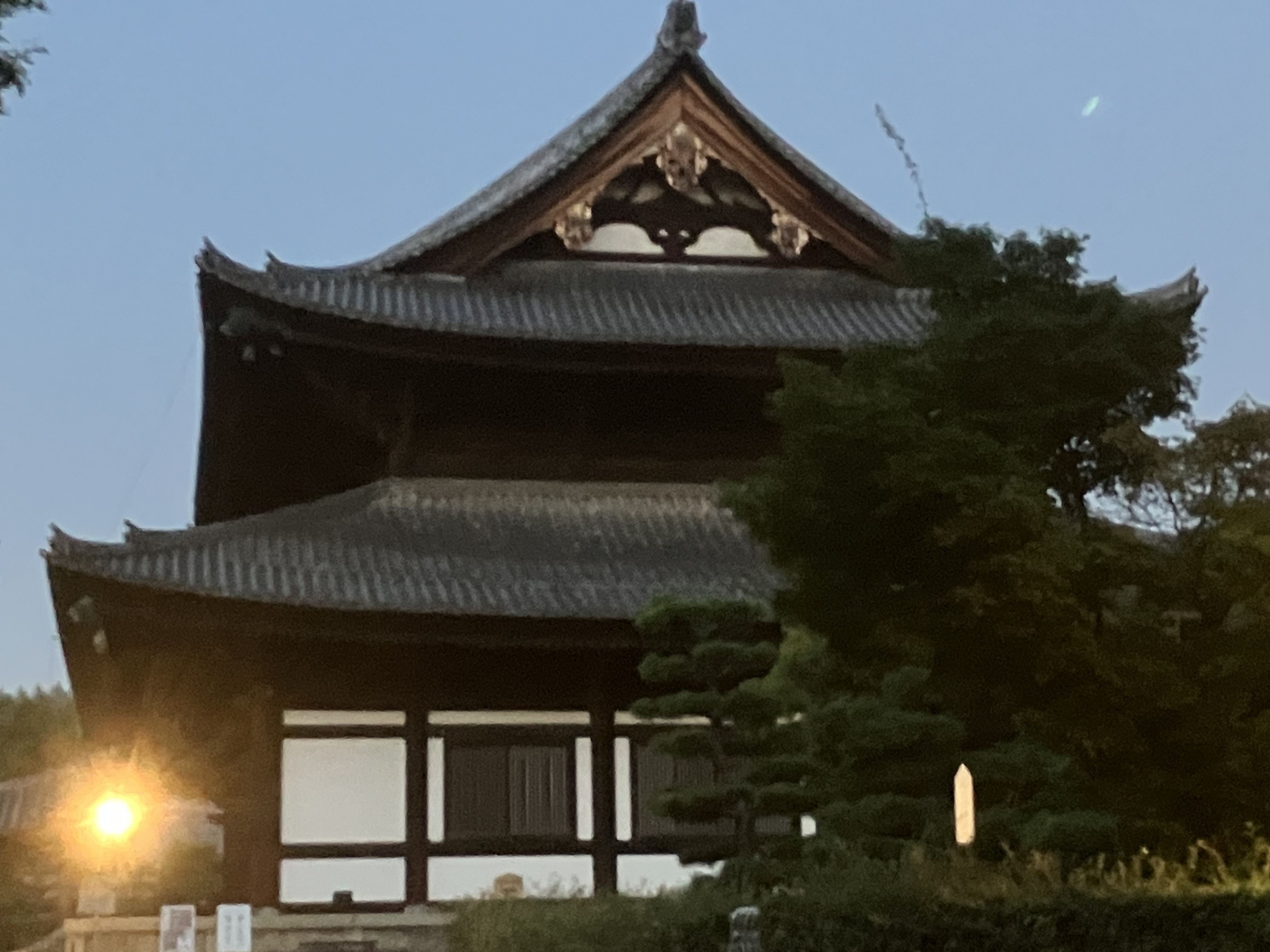
Tofuku-ji is the head temple of the Tofuku-ji branch of the Rinzai sect. It was founded in the 13th century. In the 14th century, the shogunate ranked Zen temples(京都五山), and Tofuku-ji was placed fourth.
The temple grounds are spacious, and a small valley runs almost right through the center. There's a bridge to cross that valley. If you pay the admission fee, you can cross this bridge. it's lively during the autumn leaves season.
Sennyu-ji Temple(泉涌寺)
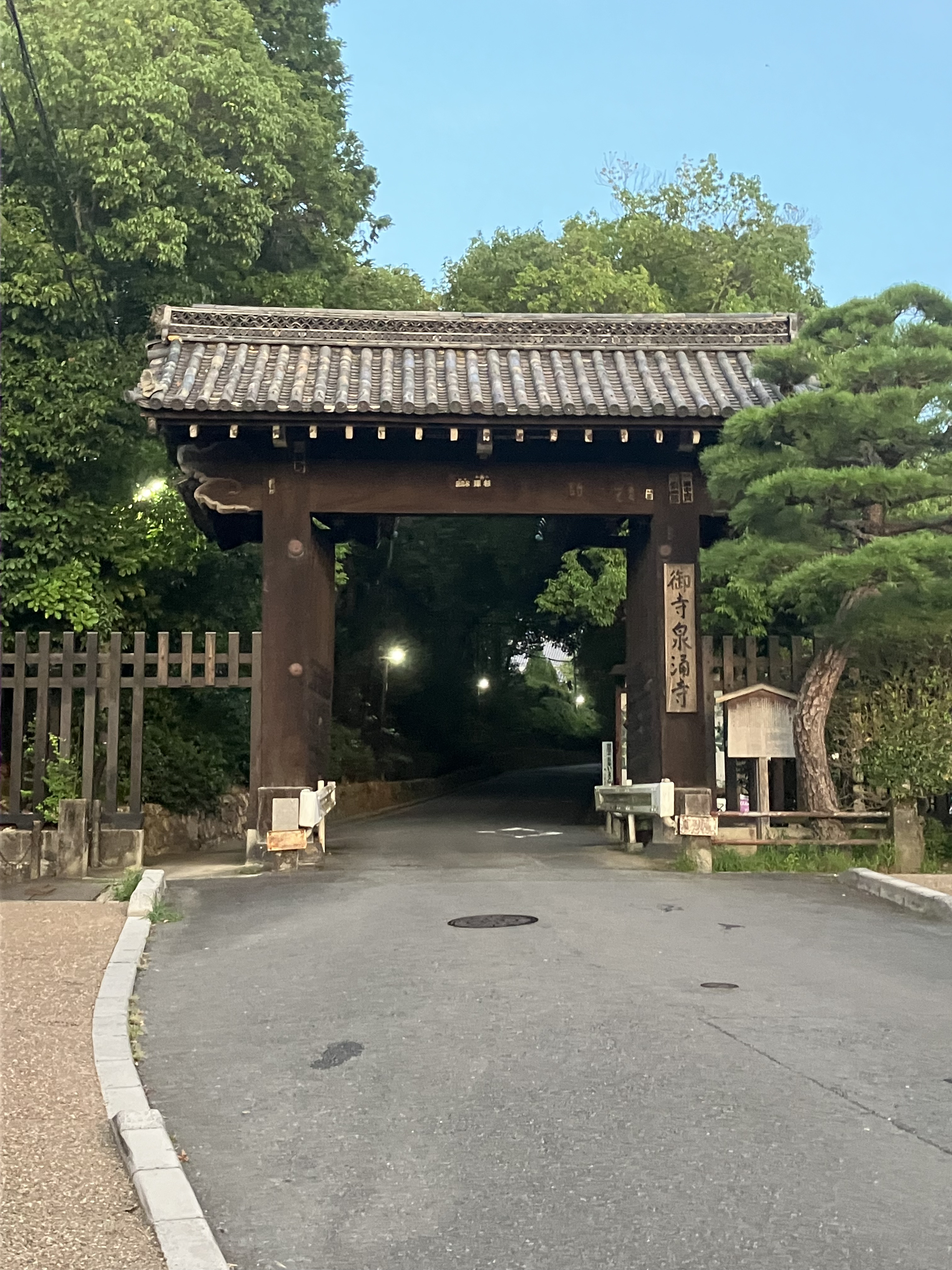
Walk a little over 1 km northeast from Tofukuji. Also, Sennyu-ji is located in the mountains. If you walk Fushimi Inari Taisha beforehand, I’d be worried about your stamina. But it’s definitely worth going, both in terms of time and effort. Sennyu-ji is also known as 'Mitera,' which means a noble temple. Since the 11th century, it has been worshiped by the imperial family for hundreds of years, and many emperors and empresses have taken tonsure here. Their mausoleums are also here. The temple has beautiful buildings and many treasures.
South Route
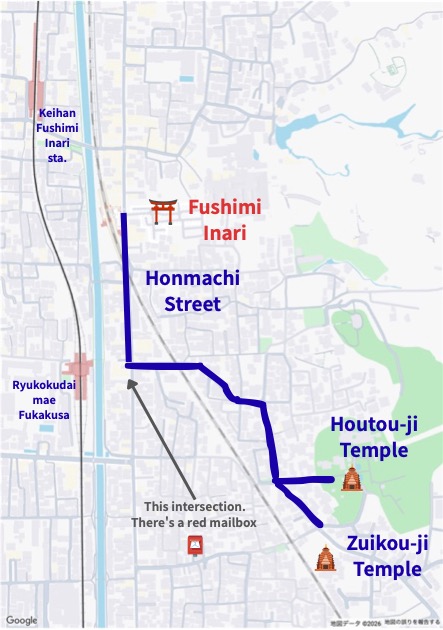
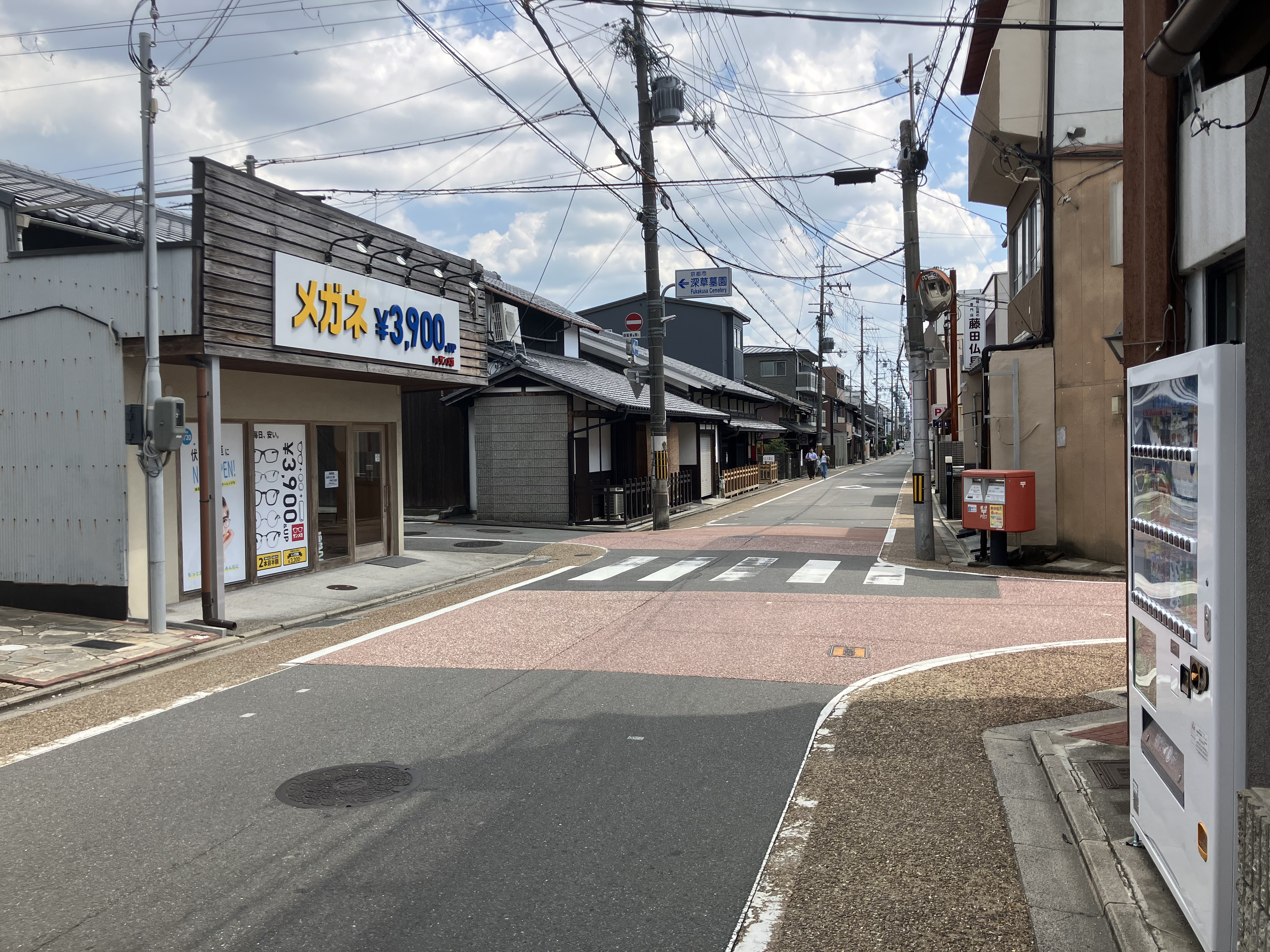
A route about 1 km southeast from Fushimi Inari Taisha. Compared to the North Route, this temples isn’t very famous. It’s not very big either. But There are pagoda and a thatched-roof hut, you can get a feel of Japanese vibes in a short time.
Houtou-ji Temple(宝塔寺)
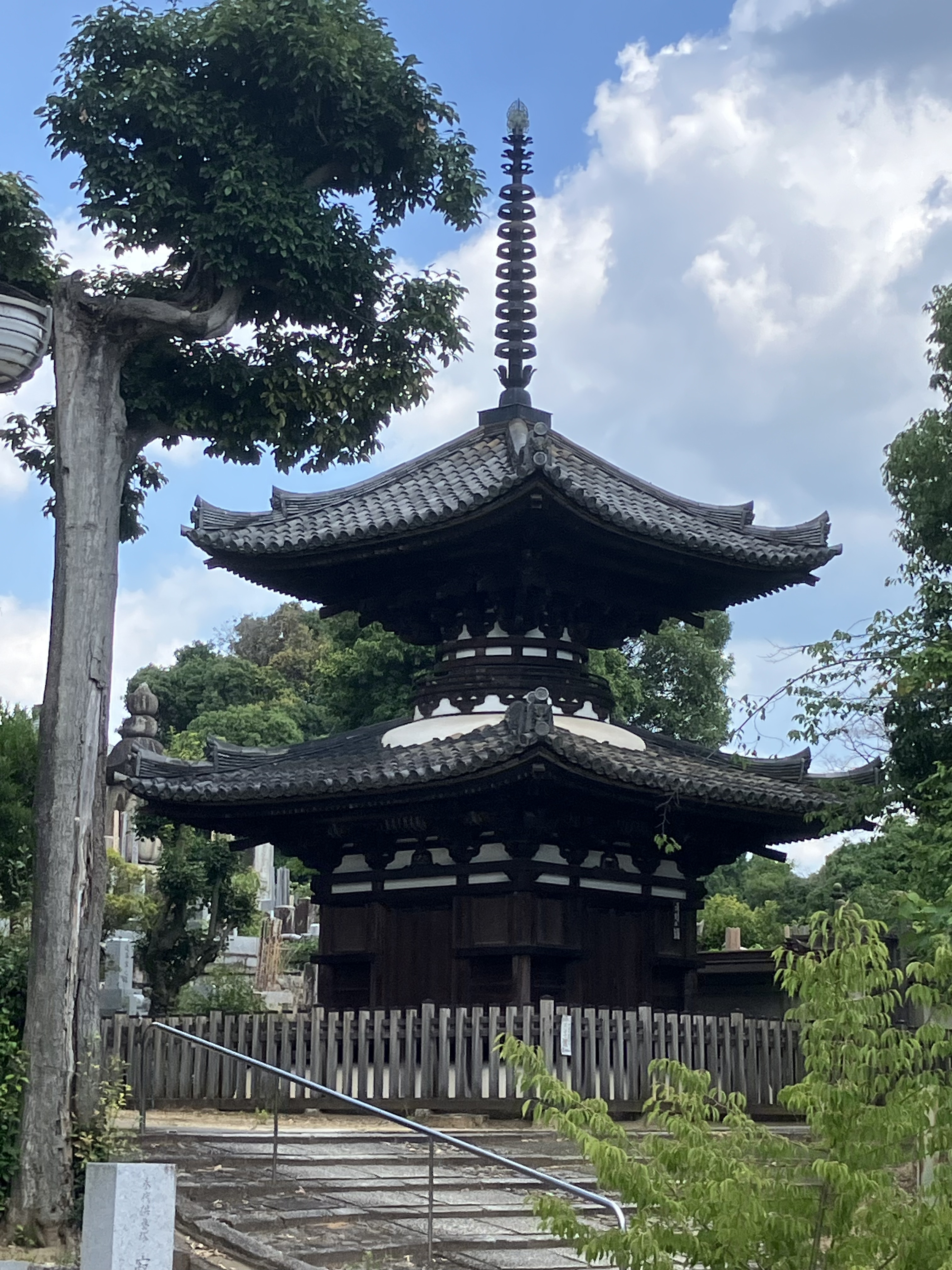
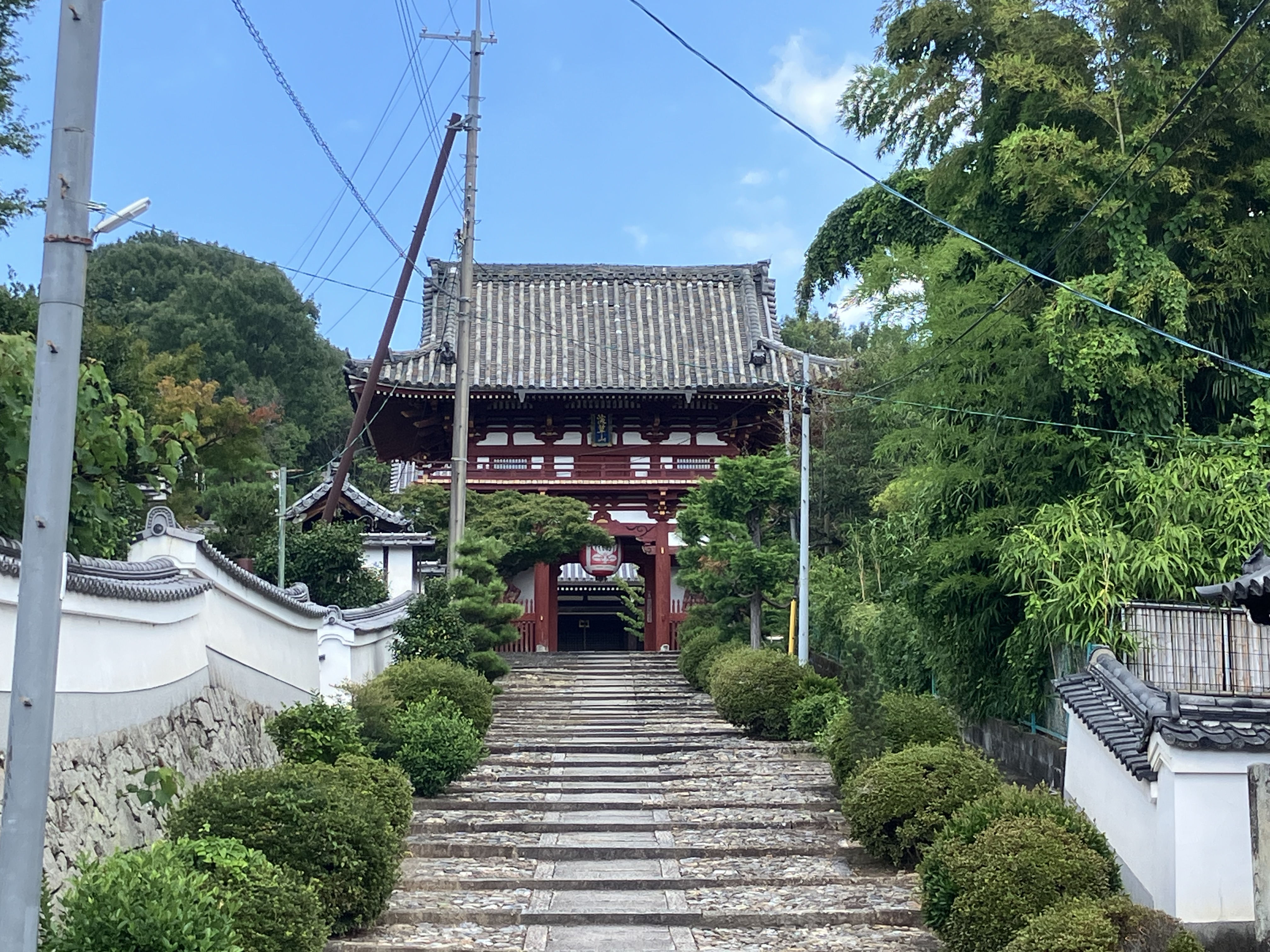
It was founded in the 9th century. On the grounds, there's an impressive pagoda—the oldest pagoda in Kyoto, built in the 15th century. Besides that, the bright red gate and the main hall are also beautiful.
Zuikou-ji Temple(瑞光寺)
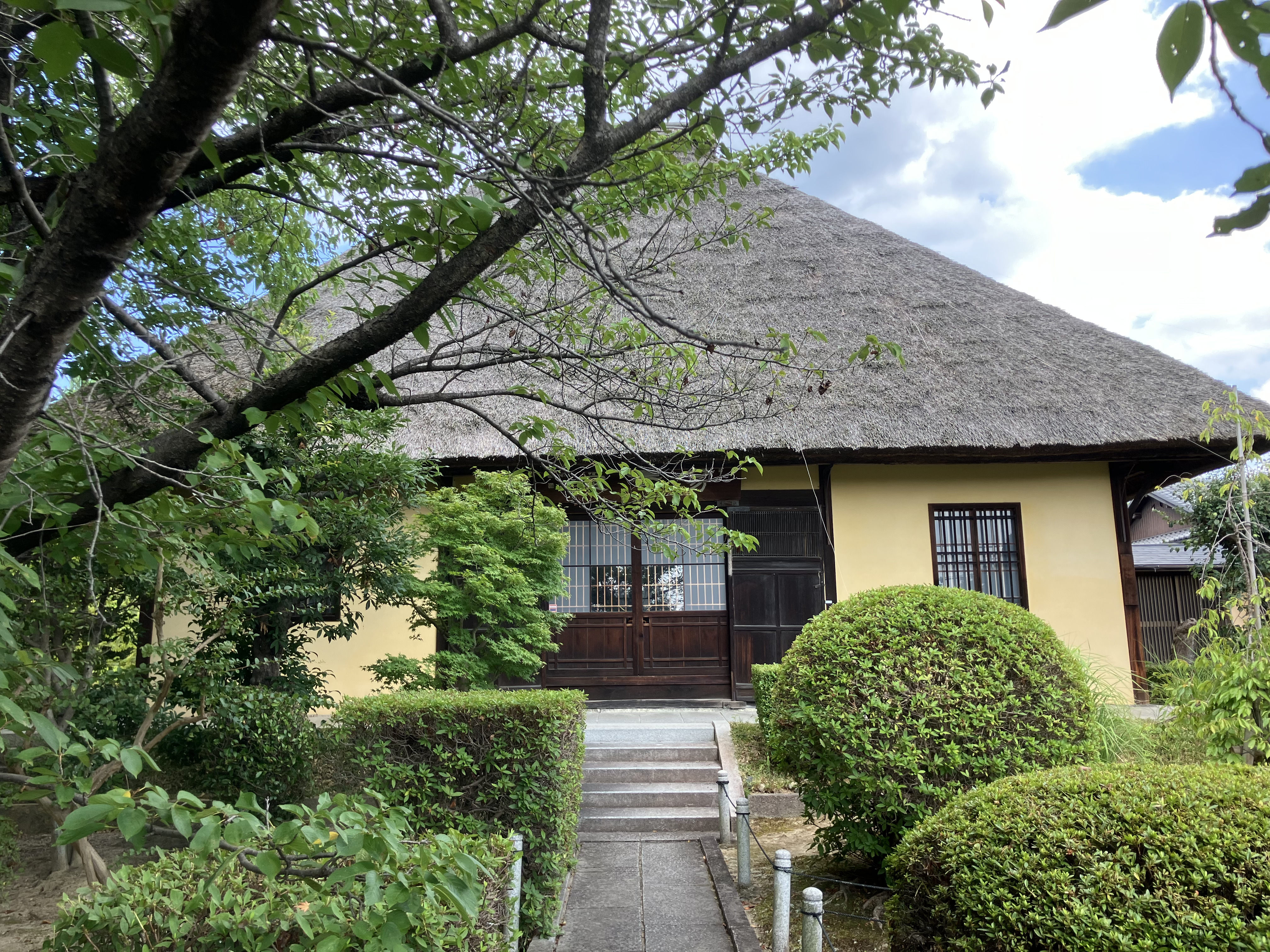
This place was the retreat of a monk named Gensei in the 17th century. He was known as a poet, and he cared deeply about his mother. He lived quietly in this place with his elderly mother. The thatched-roof hall gives a hint of the hermit's atmosphere.
The area names around Fushimi Inari Taisha are called 'Fuka-kusa (深草)'. 'Fuka (深)' means 'deep' and 'kusa (草)' means 'grass'. This area used to be a grassland where tall grass grew.
According to the poems of the 12th-century noble Fujiwara no Shunzei:
By evening, the autumn wind seeps right into my body. I can hear the call of quails hidden in this deep grass land.
Right now, the deep grass land doesn't exist. It has become a residential area. But when I see old temples and shrines, I imagine how it used to be.